The Fastest Way to Check for a Warrant in Florida
If you think you may have an arrest warrant, the best first step is to check official public records and then verify what you find with the agency or court that issued the warrant. In Florida, you can begin with the Florida Department of Law Enforcement Wanted Persons Search. You should also check the sheriff, clerk of court and court-record systems in the county where the case may have started.
An online result is only a starting point. FDLE explains that its public results are updated every 24 hours and are not final confirmation that a warrant is still active. A warrant may have been served, withdrawn or changed after the information was reported. The opposite can also happen: a valid warrant may not appear in a public search yet.
That is why a careful warrant check has two parts: search official records, then confirm the current status with the reporting agency, court, an attorney or another qualified professional before taking action.
Why Someone May Suspect There Is a Warrant
A person may hear about a possible warrant from a family member, employer, law enforcement contact or court notice. In other cases, the concern begins after a missed court date or an unresolved criminal case.
Common reasons to check include:
- Missing a scheduled court appearance
- Not completing a court-ordered requirement
- A possible probation or pretrial-release violation
- Learning that police are trying to make contact
- Receiving a notice about an older case
- Discovering a case or warrant number in a county record
These situations do not automatically mean an active warrant exists. They are reasons to verify the record instead of guessing.
Step 1: Gather the Information You Will Need
Before searching, collect enough information to distinguish the correct person from someone with a similar name. Useful details include:
- Full legal name, including any former names or aliases
- Date of birth
- County where the incident or court case may have occurred
- Approximate date of the case
- Case number or warrant number, if known
- Name of the law enforcement agency involved
Be cautious with sensitive information. Use official government websites and do not send Social Security numbers, identification documents or payment information to an unverified search service.
Step 2: Search the FDLE Wanted Persons Database
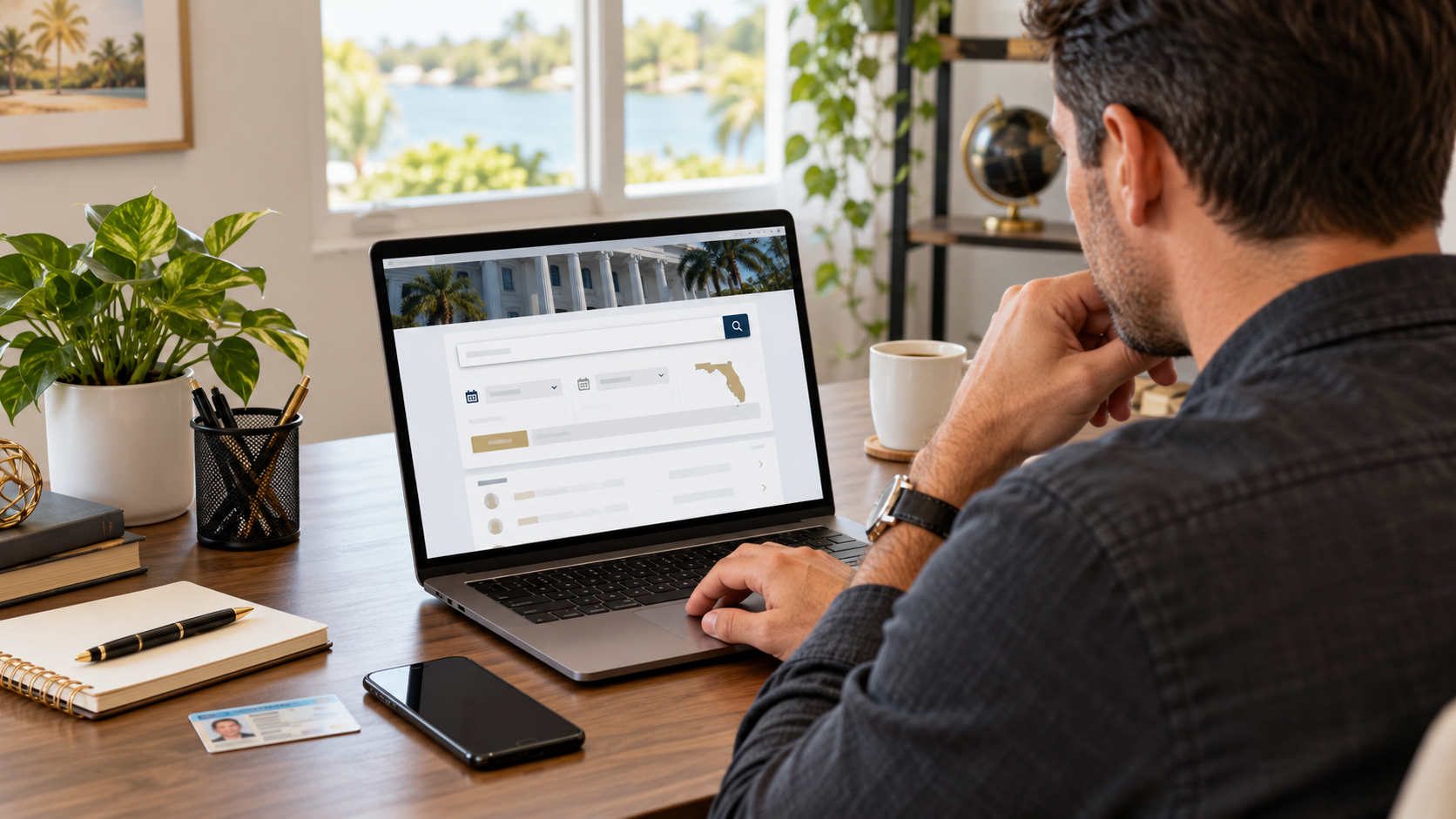
The FDLE Public Access System is a useful statewide starting point. The search can return records reported by Florida law enforcement agencies, and FDLE requires at least the last two letters of a surname or an exact nickname to begin a search.
Search carefully and compare more than the name. Review the date of birth, physical description, reporting agency, possible offense, warrant number and any other identifying details. A shared name alone is not enough to conclude that the record belongs to you.
Most importantly, read the warning attached to the result. FDLE states that a search result is not final confirmation that a warrant is active and should not be treated as legal authority to act. Contact the agency shown in the record for current information.
Step 3: Check the County Sheriff and Local Warrant Unit
Many warrants are handled at the county level. Search the official website of the sheriff’s office in the county where the warrant may have been issued. Look for sections labeled warrant search, wanted persons, fugitive warrants, records or inmate search.
In Palm Beach County, for example, the Palm Beach County Sheriff’s Office Fugitive Warrants Unit processes, stores and executes arrest warrants issued through the county court system. Procedures and public-search options vary by county, so use the official agency site for that location.
If the person may already have been arrested, use the site’s Florida inmate locator resources to check county booking systems.
Step 4: Search the Clerk of Court Case Record
A criminal case docket can provide important context even when a warrant search is unclear. The county clerk’s online case system may show a missed hearing, a failure-to-appear entry, a judge’s order or a later hearing that changed the case status.
Start with the county where the case was filed. Search by name or case number and review the most recent docket entries, not just the original charge. If you are trying to confirm an upcoming appearance, see the guide to finding a Florida court date.
Court terminology can be difficult to interpret, and public dockets may not show every detail. When the record is unclear, contact the clerk, the issuing court or a criminal defense attorney for help understanding the current status.
Step 5: Verify Whether the Warrant Is Still Active
Do not rely on a screenshot, an old search result or a third-party people-search website. Use the agency name and warrant or case number to request current information from an official source.
Ask specific questions:
- Is the warrant active now?
- Which county and court issued it?
- What is the warrant or case number?
- Is a bond amount already set?
- Is the warrant marked no bond or subject to first appearance?
- Are there other warrants, charges or holds?
- Does the agency have instructions for a planned surrender?
The agency may limit what it will discuss by phone. If you are concerned that direct contact could lead to an immediate arrest, speak with a criminal defense attorney or a licensed bail bond agent before appearing in person. No one should promise that a phone call, courthouse visit or surrender will be arrest-free.
What Warrant Search Results May Show
Depending on the database, a result may include the person’s name, date of birth, physical description, alleged offense, warrant date, warrant number, reporting agency and county. It may also show a caution note or contact information for the agency.
A record does not always display the bond amount. Bond eligibility may depend on the charge, the judge’s order, the defendant’s history and whether another warrant or hold exists. A bail bond agency can discuss the Florida bail bond process, but the court and holding agency control whether release is authorized.
What to Do If You Find an Active Warrant
Do not ignore the warrant or assume it will disappear. Avoid driving to a jail or courthouse without first understanding the warrant, bond status and local procedure.
- Write down the official details. Record the issuing agency, county, case number, warrant number and listed charge.
- Confirm the status. Verify the warrant through the reporting agency, court or counsel.
- Ask whether bond is set. Find out whether a monetary bond is available or a judge must review the case first.
- Review every hold. One bondable warrant does not guarantee release if another charge, warrant or agency hold exists.
- Plan the surrender. When appropriate, coordinate timing, transportation, paperwork and bail before appearing.
Frank Chavez Bail Bonds provides information about outstanding-warrant bonds and the Florida warrant walk-through and planned self-surrender process. If bond is available, preparing in advance may reduce avoidable delays. It cannot eliminate booking requirements or guarantee immediate release.
Can Bail Be Arranged Before You Turn Yourself In?
Sometimes. If the warrant has a preset bond and the local agency accepts a coordinated walk-through, a licensed bail bond agent may be able to prepare the bond before the person reports. The person still has to follow law enforcement instructions and complete required processing.
In a smooth warrant walk-through, the person is identified and processed, the prepared bond is submitted and the person is released after the agency completes its work. The exact sequence and timing vary by county and facility.
Start with the secure bail forms only after confirming that you are working with the correct licensed agency and that the warrant appears bondable.
Why a Person May Still Be Booked or Held
Planning ahead can help, but it is not a promise that someone will avoid custody. A person may still be booked, placed in a holding area or kept for a first appearance when:
- The warrant is no bond
- A judge must set or review bail
- Another warrant or charge is discovered
- A probation, immigration or out-of-county hold applies
- The bond amount or warrant status changed
- The paperwork cannot be accepted or verified immediately
- The facility’s processing schedule causes a delay
Release depends on the complete legal and booking record, not one online entry. Even after bond is posted, the jail must finish its release checks.
Common Mistakes to Avoid
- Using only a paid people-search site. Third-party databases may be incomplete or outdated.
- Assuming no online result means no warrant. Some records are delayed, restricted or not searchable by the public.
- Assuming an old result is still active. Always verify with the reporting agency.
- Looking only at one county. A warrant may come from another Florida county or another state.
- Appearing without a plan. Confirm bond status and surrender instructions before going in when possible.
- Sending money to an unverified contact. Confirm the agency, website and professional license before sharing information or paying.
Frequently Asked Questions About Florida Warrants
Can I check for a Florida warrant for free?
Yes. FDLE provides a public wanted-person search, and many county sheriffs and clerks provide free public record searches. A public search is useful for screening but may not be final confirmation of warrant status.
Does an FDLE result prove that a warrant is active?
No. FDLE instructs users to contact the reporting agency because the public result is not final confirmation that the warrant remains active.
Can an active warrant be missing from an online search?
Yes. Reporting delays, restricted records, spelling differences, sealed information or limits in a local system can affect what appears online. Search more than one official source and verify directly.
Will a warrant eventually expire?
Do not assume it will. The status depends on the warrant and the court. Learn more in How Long Does It Take for a Warrant to Go Away?
Can I pay a bond before surrendering?
In some cases, bond documents can be prepared before surrender, but law enforcement still controls processing and release. Confirm the warrant, bond amount and local procedure first.
What if the warrant says no bond?
A no-bond warrant generally cannot be resolved by simply paying money. The person may need to appear before a judge. An attorney can advise on the legal issues, while a bail bond agent can explain options if a bond is later authorized.
Use Official Records and Confirm Before Acting
The most reliable way to find out whether you have a warrant is to combine a statewide FDLE search with county sheriff and court records, then confirm the current status with the agency responsible for the warrant. Save the case details, verify whether bond is available and understand every hold before planning a surrender.
If a Florida warrant has a bond, Frank Chavez Bail Bonds can explain the bonding and walk-through process and help you prepare the required paperwork. Preparation can make the process more orderly, but the court and law enforcement agency decide whether the person must be booked, held or brought before a judge.
This article is for general educational purposes and is not legal advice. Warrant, surrender, booking and release procedures vary by jurisdiction and can change. Confirm current information with the issuing court, sheriff’s office, law enforcement agency or a qualified attorney.